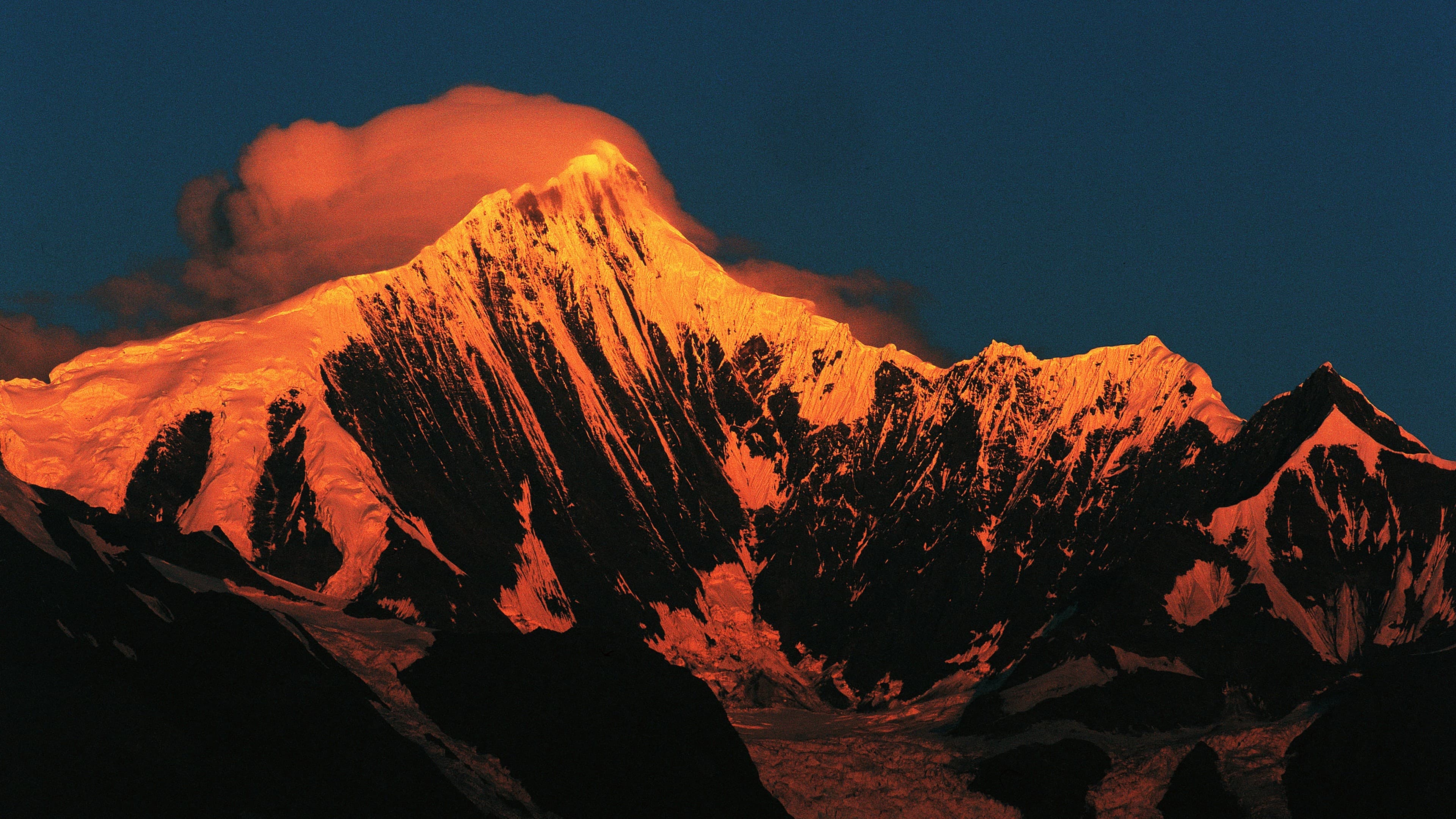
Walking Toward Kawagarbo
In the Meili Snow Mountain range of northwest Yunnan, the journey toward Kawagarbo is less about arrival than about learning how to approach a sacred landscape with patience, humility, and attention.
Some mountain journeys are defined by the summit. This was not one of them.
The first feeling was not conquest, but distance. Kawagarbo did not rise out of the landscape like something inviting a challenge. It stood apart, remote in the way truly sacred places often do, gathering weather and silence around itself. Even from far off, the mountain seemed to change the rhythm of the road, the scale of the valley, the quality of attention. We were not moving toward an objective so much as entering the gravity of a place that had already decided its own terms.
Kawagarbo, the most revere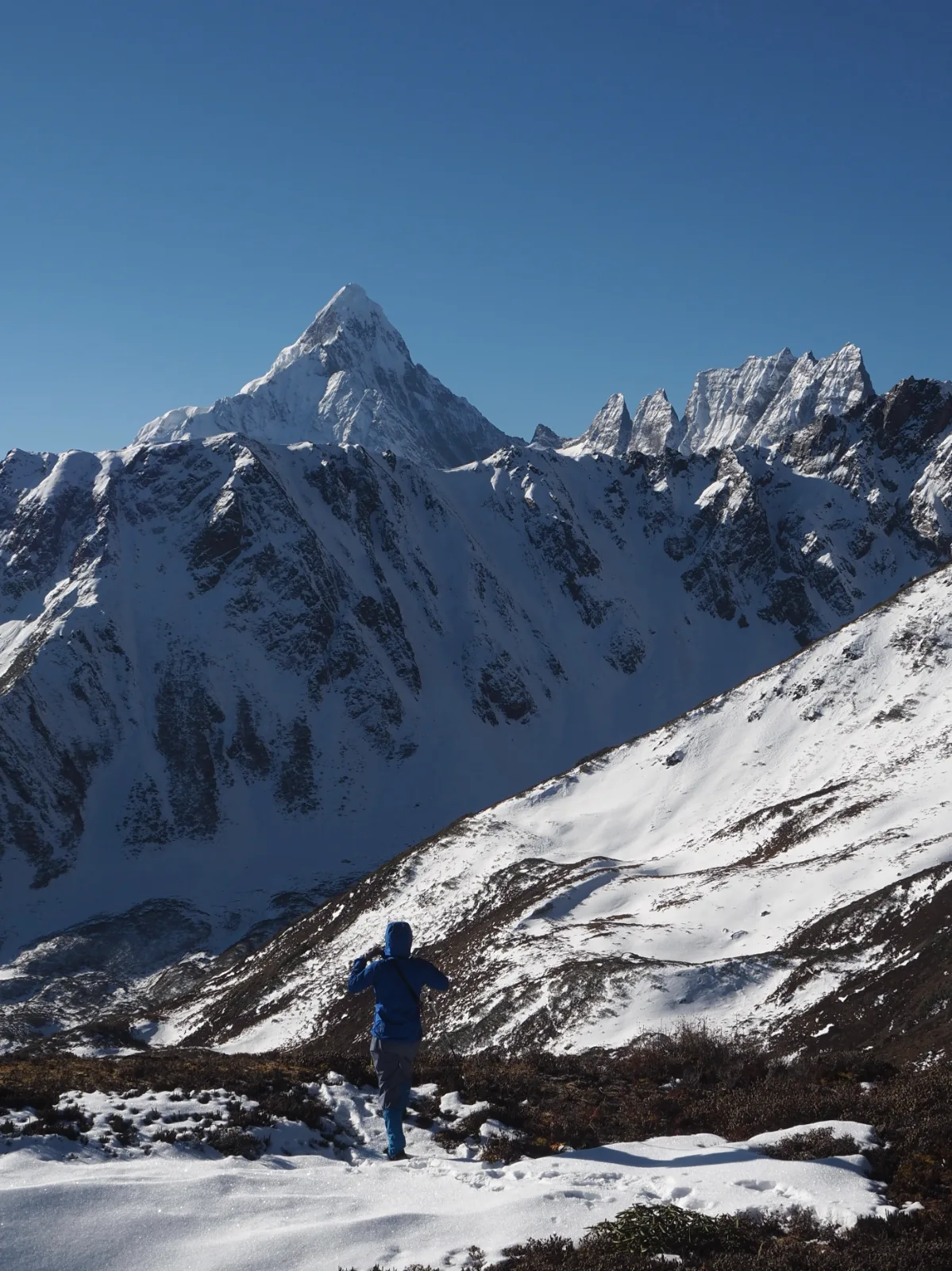 d peak in the Meili Snow Mountain range of northwest Yunnan, is often approached through trails, villages, monasteries, and viewpoints that reveal it only partially. That is part of its power. The journey does not offer a single dramatic unveiling and then resolve into certainty. Instead, it unfolds through fragments: a ridge lit briefly at dawn, a line of prayer flags moving in cold air, a valley path that narrows and opens again, a glimpse of white far beyond dark forest. To walk toward Kawagarbo is to understand that some landscapes are not meant to be consumed all at once.
The Road Into Scale
Before the trail, there is the long adjustment of the body.
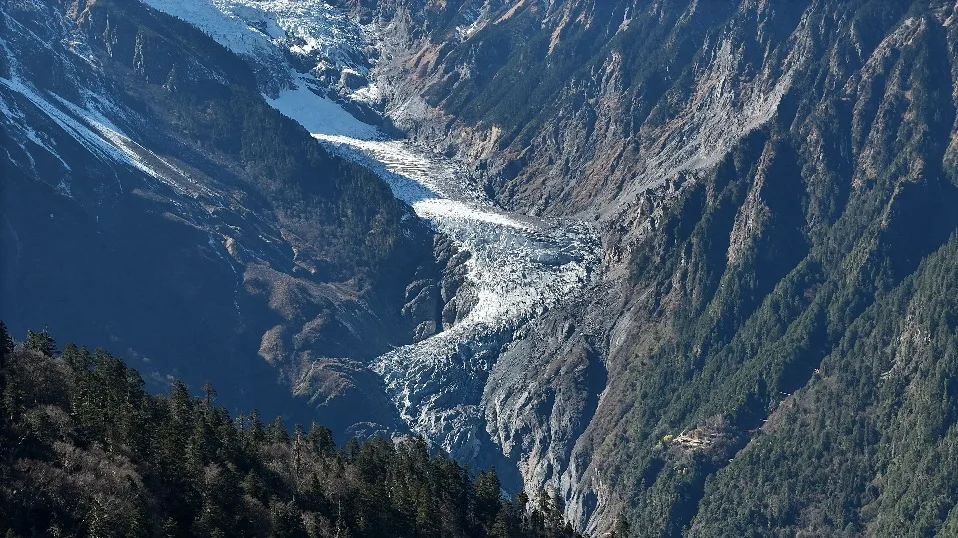 Northwest Yunnan does not yield its scale immediately. Roads curve along deep valleys, villages appear and recede, and the mountains remain difficult to measure. The landscape keeps withholding the simple perspective modern travel often promises. Distances feel longer than they look. Light moves quickly, but the terrain does not. By the time you begin walking in earnest, you have already started to give up the idea of efficiency.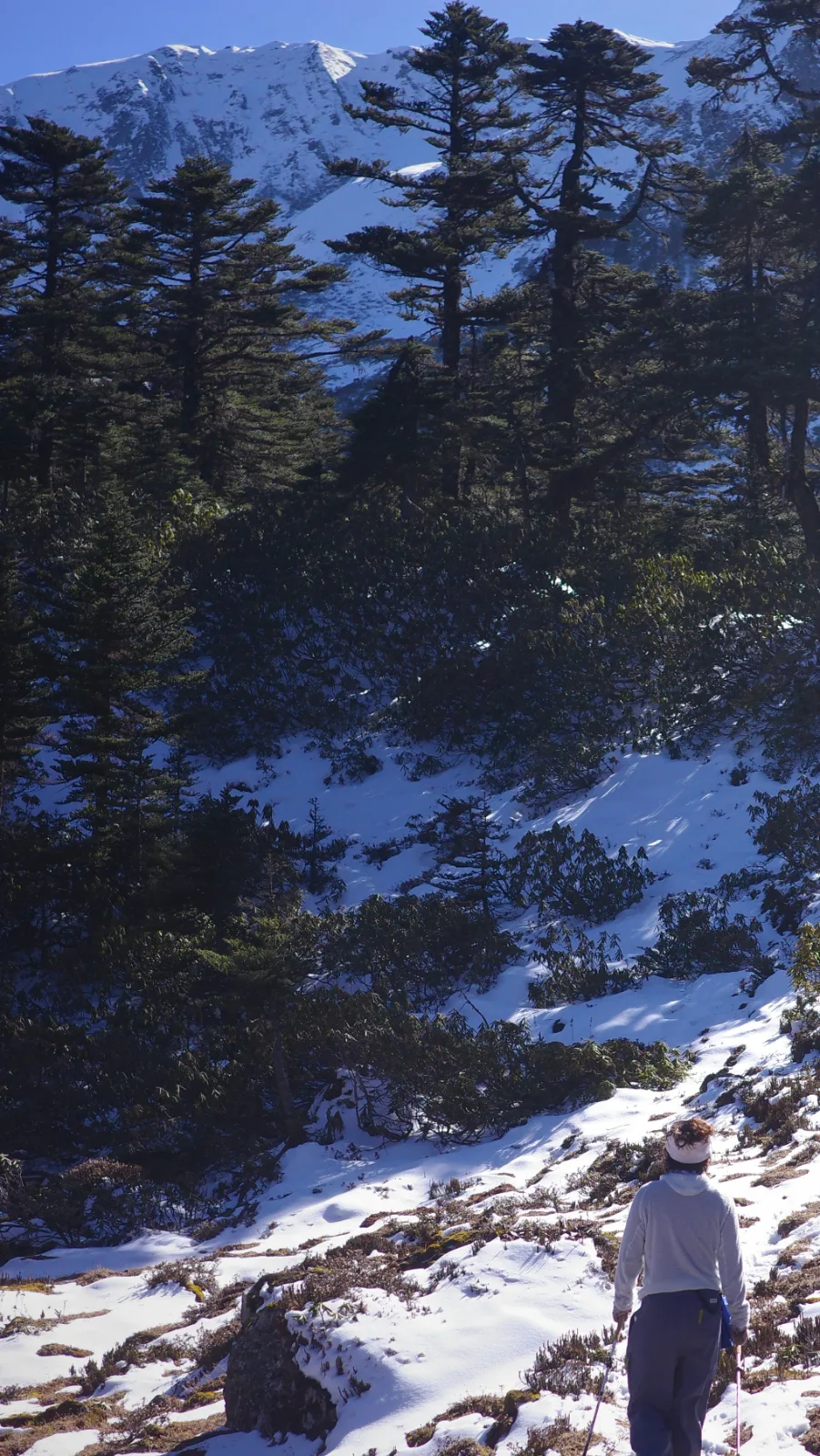
This is one of the reasons Kawagarbo lingers in the imagination. The approach is not seamless. It asks for transitions: from vehicle to footpath, from observation to immersion, from itinerary to weather. Altitude enters gradually but decisively. So does humility. The body notices what the eye first romanticizes. Breath shortens. Pace slows. Small inclines acquire weight. The mountain is not yet close, and already it is shaping behavior.
There is a quiet honesty in that.
Much of contemporary travel is designed to reduce friction, to flatten experience into access. But mountain landscapes still resist that logic. Around Kawagarbo, resistance is part of the meaning. The approach remains a form of preparation. You do not simply arrive at the presence of the mountain unchanged.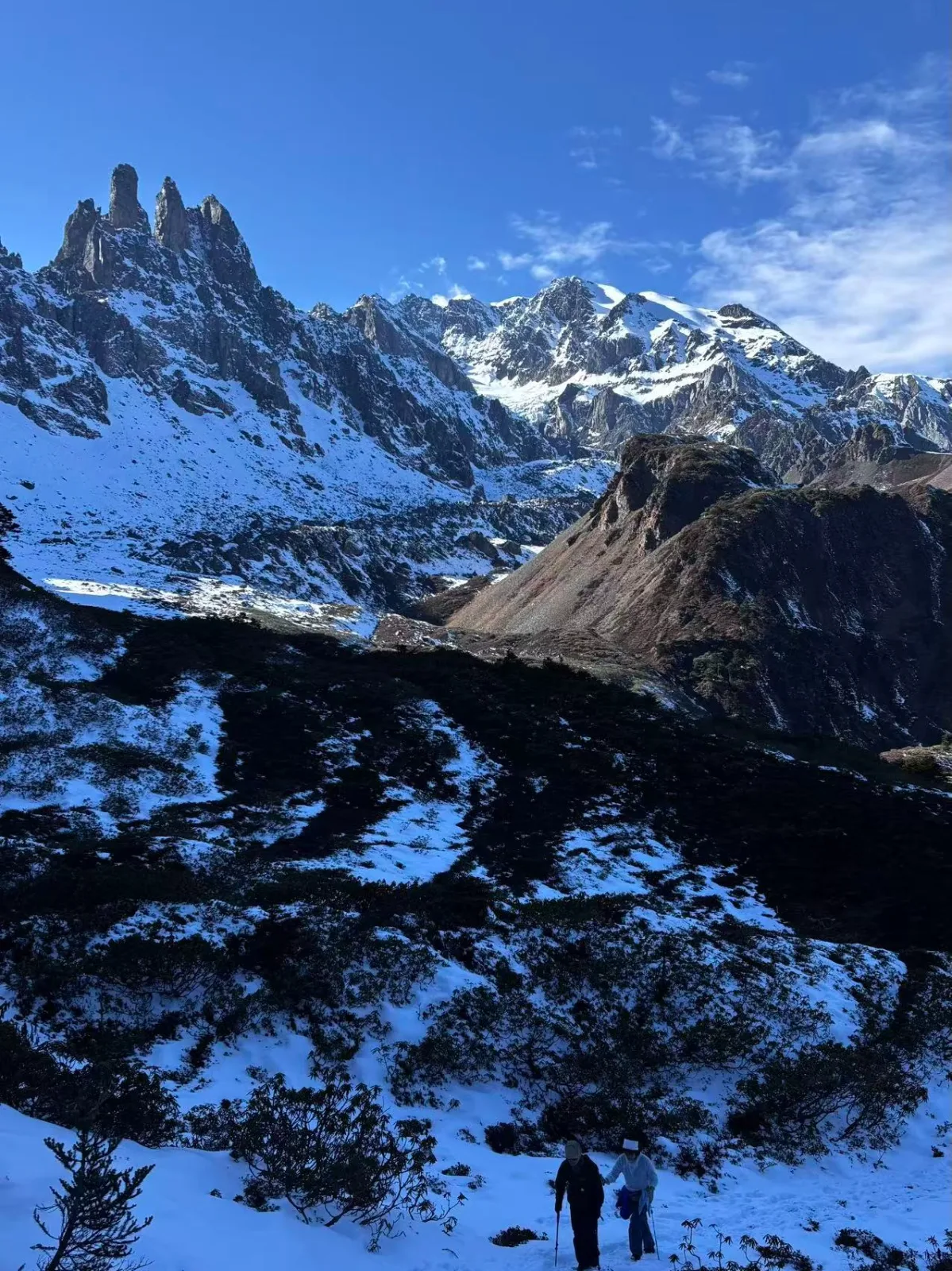
What the Path Teaches
A trail can reveal a place, but it can also teach you how to look. On the way toward Kawagarbo, the most memorable moments are often not the grandest ones. They are shifts in temperature when the forest opens. A stretch of path where the earth darkens under shade. The sound of water somewhere below, unseen but constant. The way conversation naturally thins out when the gradient sharpens. The route edits your attention, narrowing it first to the immediate and then, unexpectedly,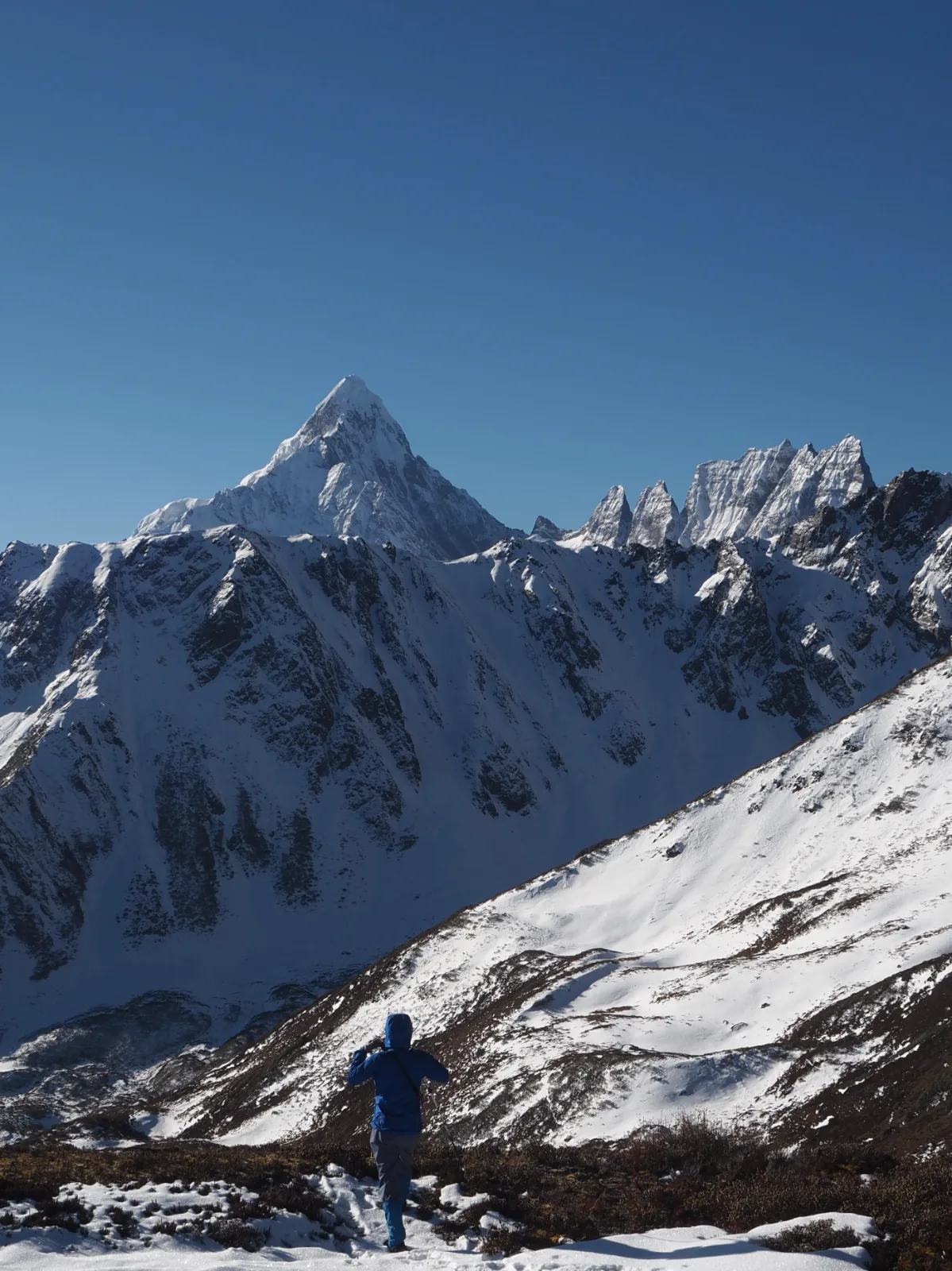 returning you to the vast.
This is perhaps why the mountain never feels like scenery alone. Even when it appears in full drama, it has already been prepared by smaller details. The terrain has taught you scale through effort, distance through repetition, weather through exposure. By the time Kawagarbo enters the frame clearly, it is no longer just a beautiful object. It has become the organizing force of the day.
There is also something distinctly human in the routes that lead through this region. Villages, rest points, prayer sites, and pathways all suggest that movement here has long carried more than one purpose. People walk for livelihood, devotion, endurance, and memory. The mountain belongs to none of these entirely, yet all of them gather beneath it. For an outsider, that layered history matters. It changes the tone of the journey. It asks for attention not only to the landscape, but to the fo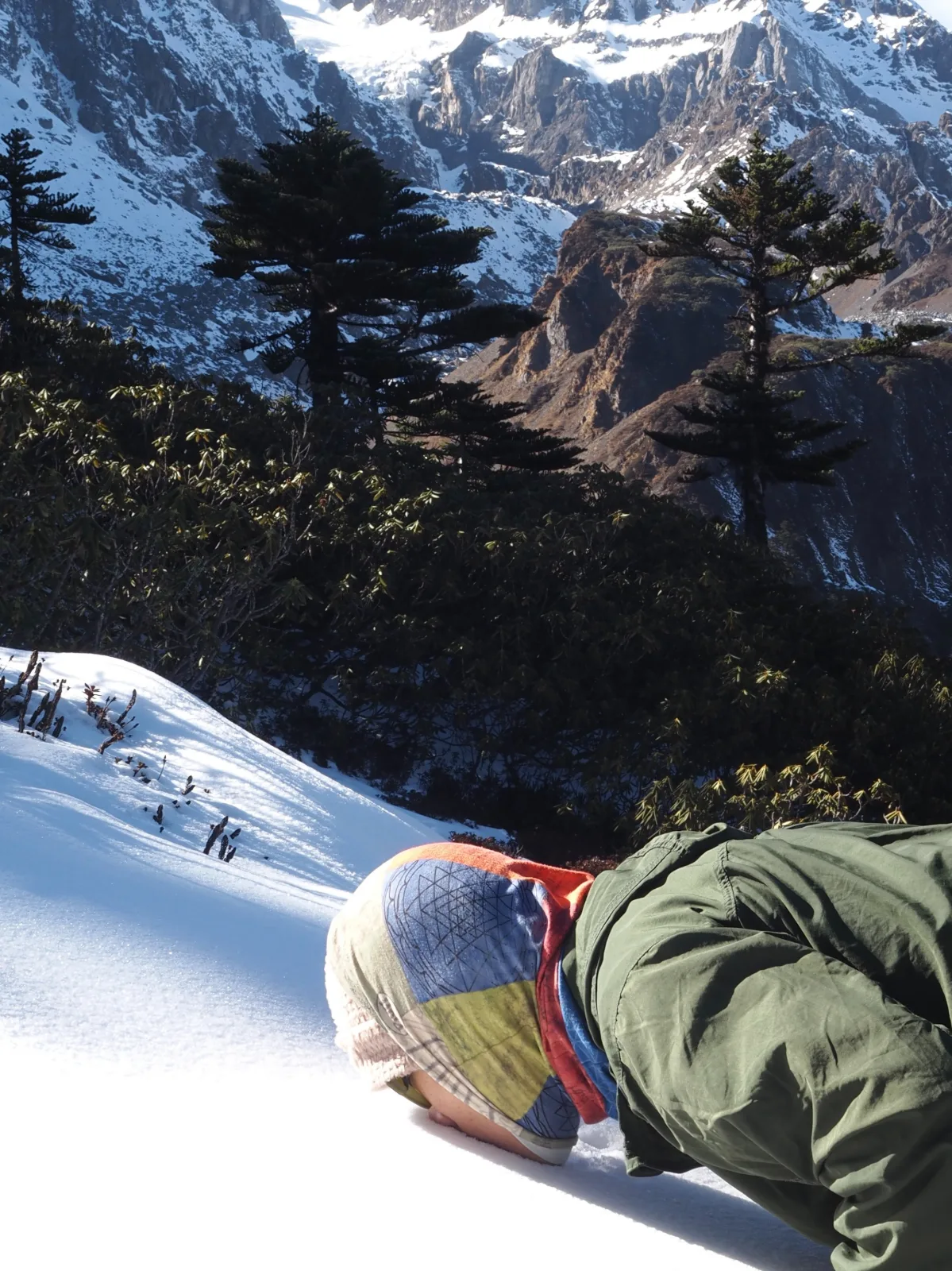 rms of respect that already exist within it.
A Sacred Mountain Changes the Mood
Not every mountain creates the same kind of feeling.
Some peaks invite ambition. Some invite fear. Kawagarbo invites restraint.
Its sacred status is not an abstract detail to mention in passing; it alters the emotional logic of being there. The mountain is not simply impressive because it is high, photogenic, or remote. It carries a cultural and spiritual significance that makes the surrounding routes feel less like recreational territory and more like a threshold. Even if a visitor arrives with no religious framework of their own, the atmosphere asks for a different kind of conduct. Less extraction. Less performance. More listening.
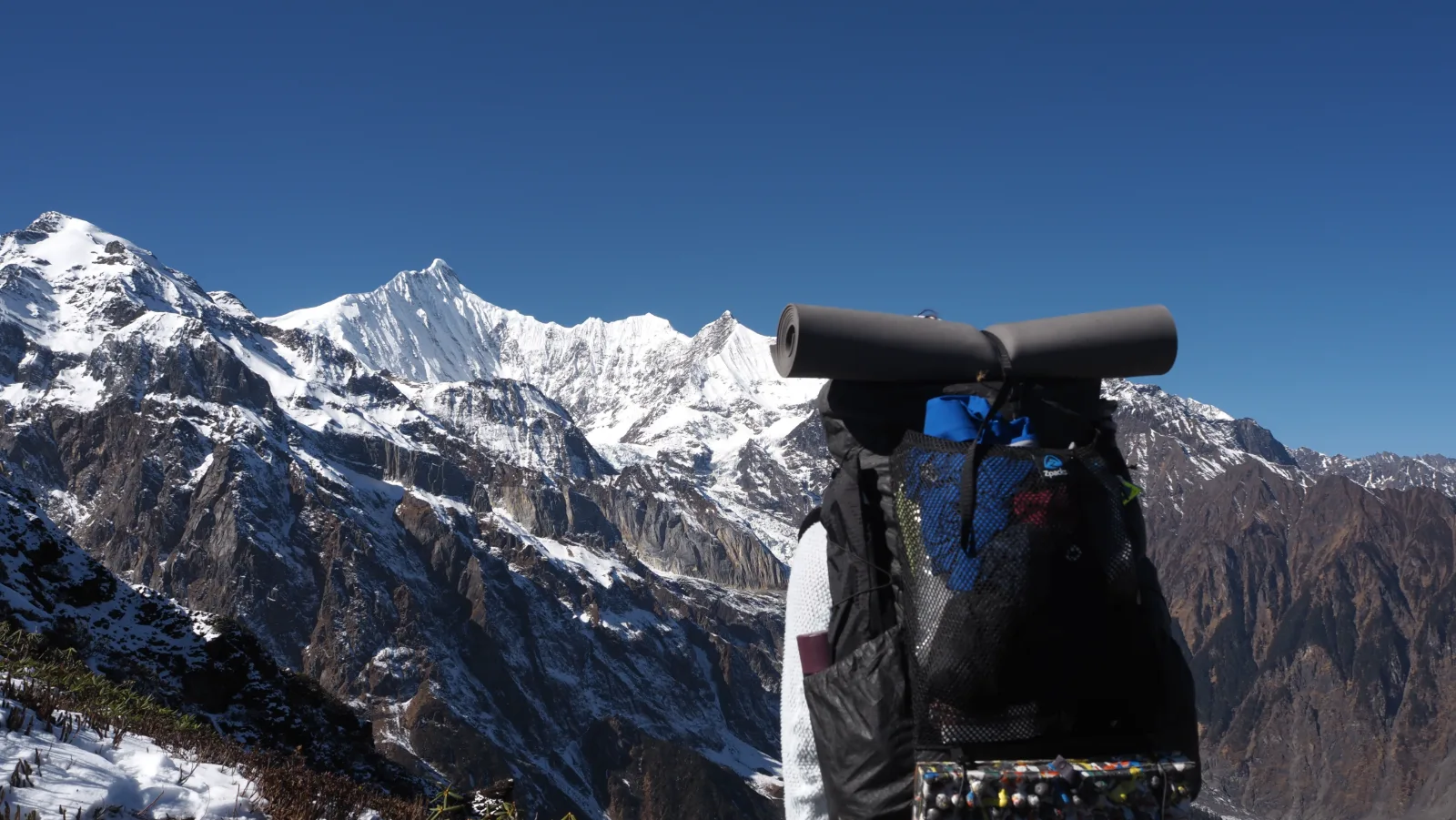 That shift can be subtle at first. It appears in how long people stand at a viewpoint without speaking. In how the weather is watched. In how prayer flags and monastery walls register not as picturesque details but as signs that the landscape has long been interpreted through reverence rather than ownership.
Travel writing too often reaches for superlatives when something feels powerful. But Kawagarbo is not best described by louder adjectives. What stays with you is not just grandeur, but composure. The mountain holds its distance. It never seems eager to be claimed by the camera, the route, or the story being made about it. That reserve is part of its beauty.
Dawn Near Feilai Temple
If there is one image many travelers carry away from this region, it is morning light.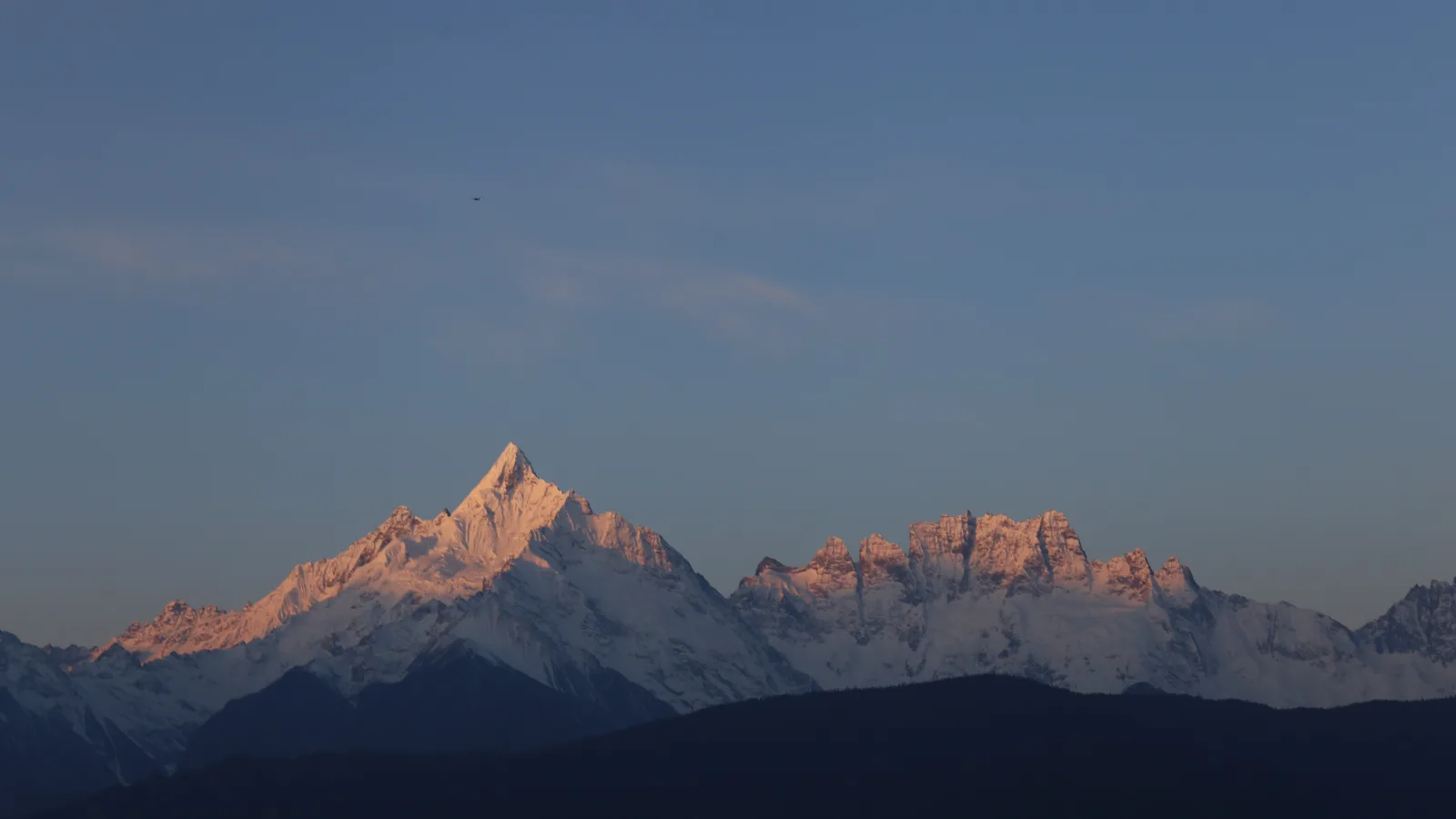
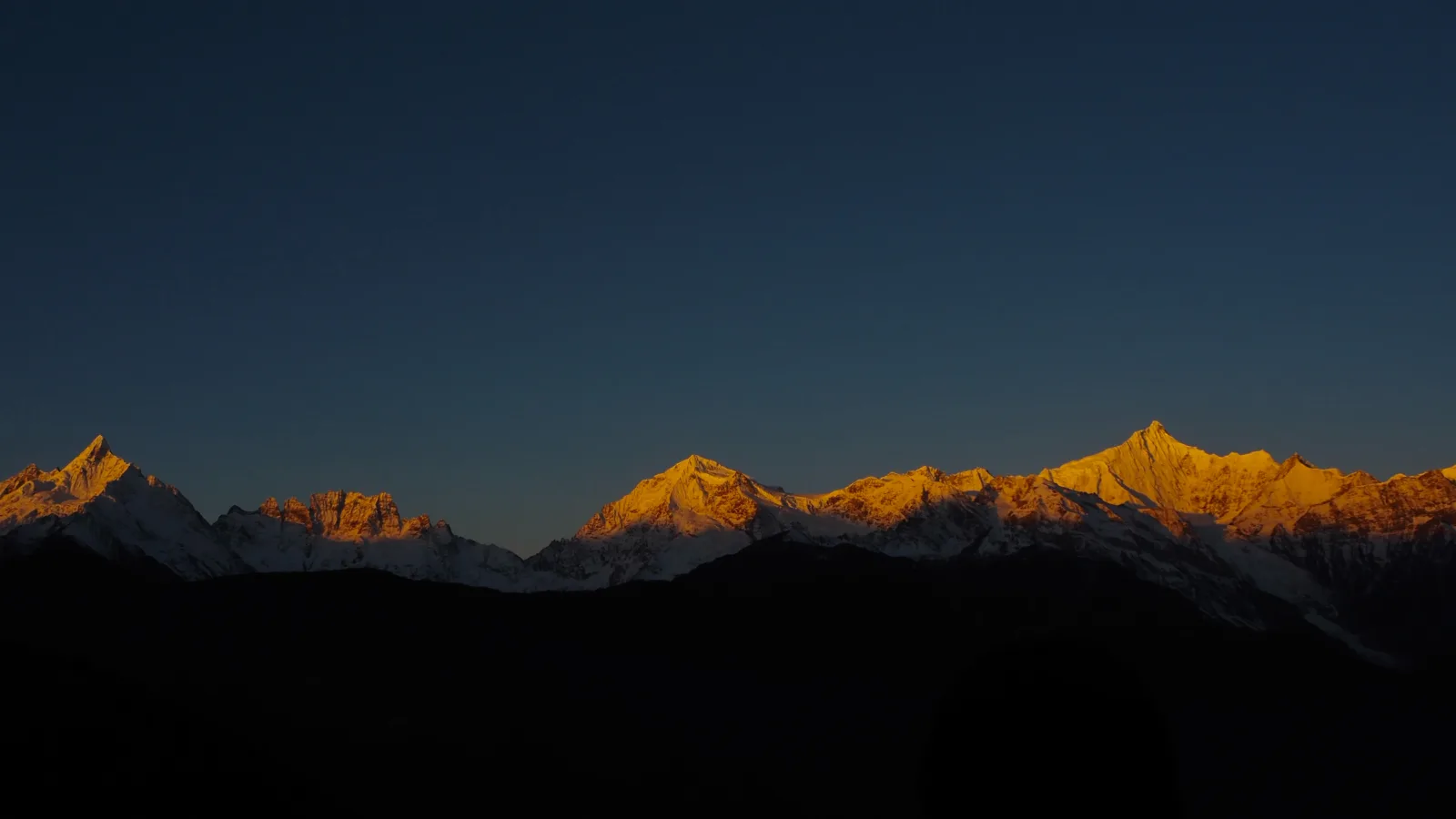
Near Feilai Temple, dawn becomes a ritual of waiting. Long before the ridgeline begins to glow, people gather in the cold and face the dark outline of the range. At first there is very little to see. Then the mountain starts to separate itself from the sky. Light reaches the higher lines before it reaches the valley. Rock and snow hold color differently. The entire range feels less illuminated than slowly disclosed.
It is a scene that could easily become cliché in description, but in person it is stranger and quieter than expected. What makes it moving is not only the visual beauty, but the discipline of attention it requires. You wait. You watch. You accept partial visibility. Clouds may cover everything. The light may shift and disappear. Nothing is guaranteed, and that uncertainty sharpens the experience.
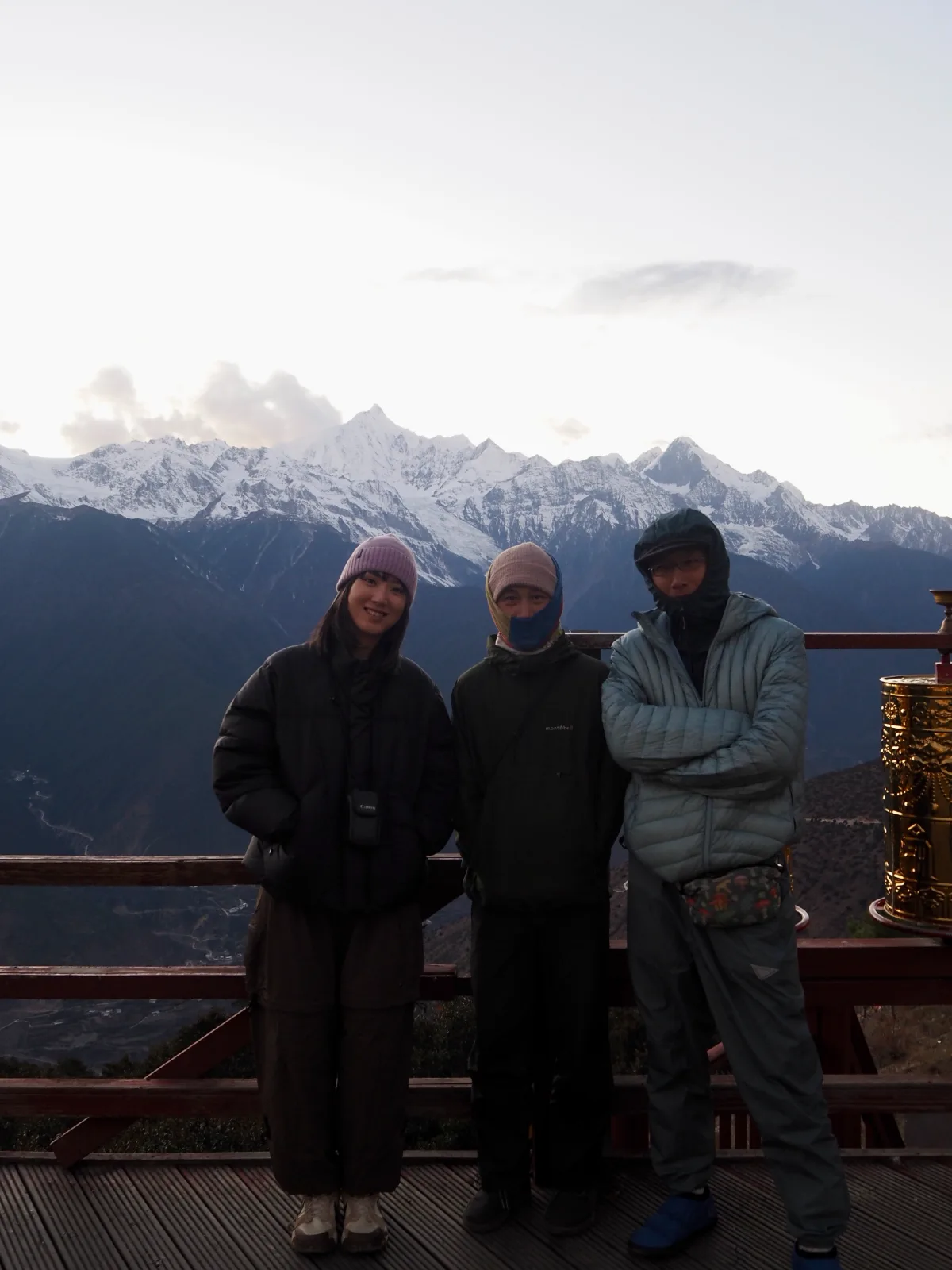 Kawagarbo often works like that. It gives through intervals. It appears and withdraws. It resists complete possession. The mountain asks whether looking can be enough.
For travelers used to building trips around maximum certainty, this can feel unfamiliar. Yet it is precisely that openness to conditions that makes the region memorable. The best moments are not engineered. They are received.
Why the East Slope Feels Different
Among the routes connected to Kawagarbo, the East Slope has a particular character.
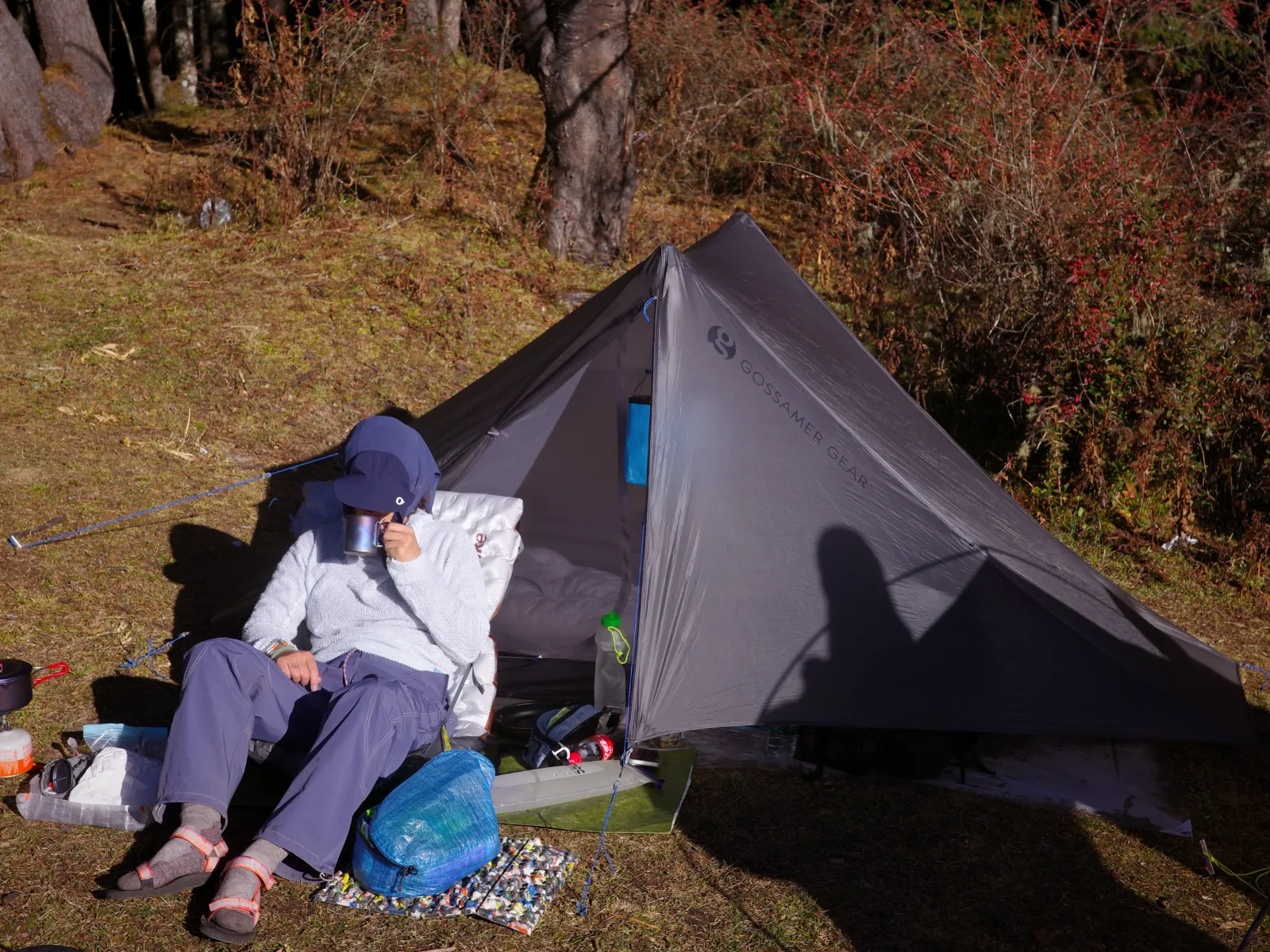
It is not simply a way of getting closer. It offers a more intimate conversation with terrain, weather, and altitude than a viewpoint alone ever could. Forest, meadows, shifting clouds, and the mountain’s changing presence create a sense of progression that is less about ticking off landmarks and more about entering a living landscape. The route has effort in it, and that effort matters. Without some physical investment, the atmosphere would remain flatter, more external.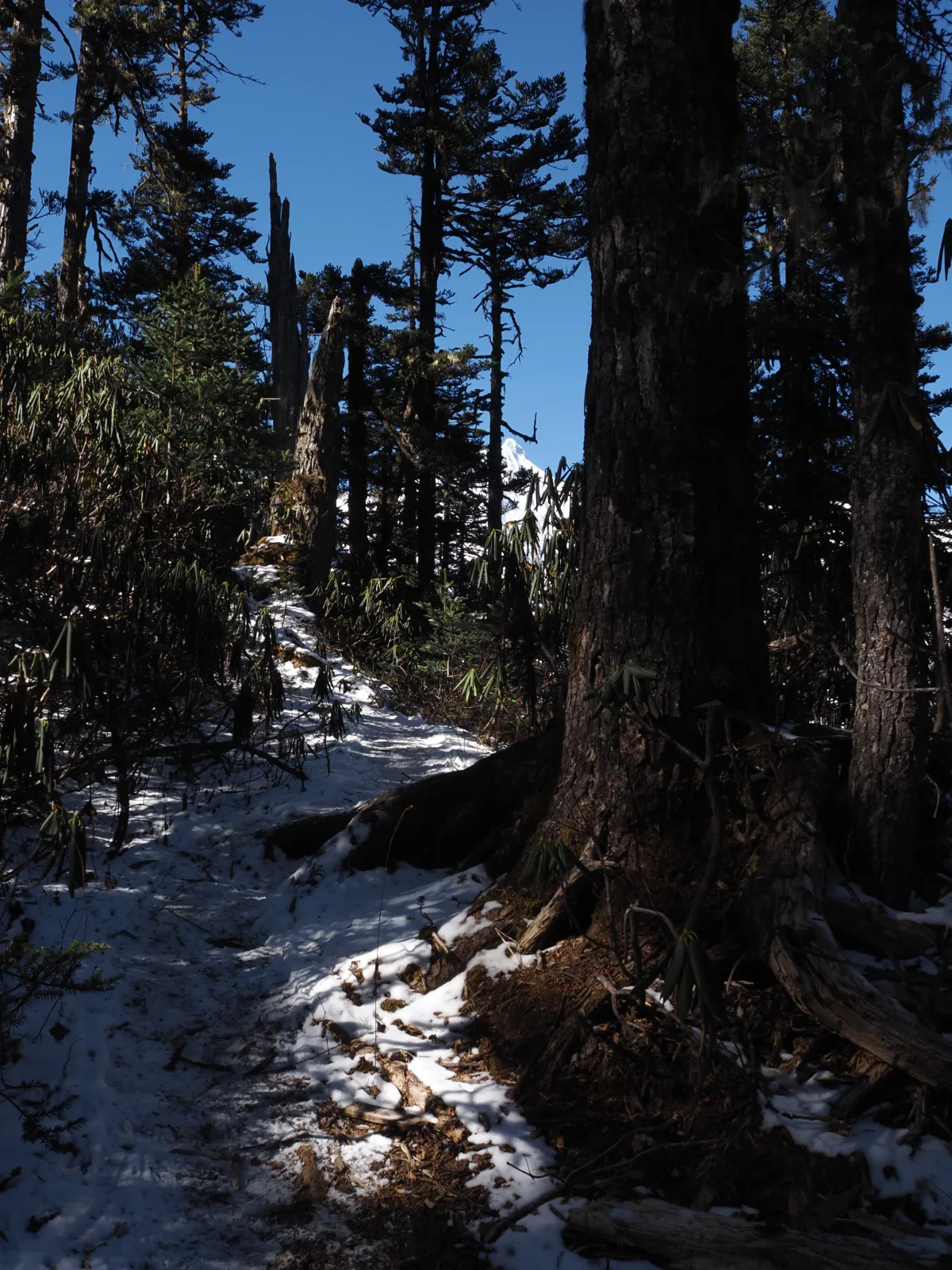
What distinguishes the East Slope, especially for travelers who care about landscape as experience rather than backdrop, is the relationship between visibility and concealment. The mountain is not always there in a stable, postcard-like frame. Instead, it emerges through movement. This makes each sightline feel earned. It also preserves a sense of mystery that more overexposed destinations often lose.
In practical terms, the East Slope is well suited to travelers who want more than a scenic stop. It rewards patience, decent fitness, and a willingness to let weather shape the day. But what it gives back is not only access. It gives proportion. You begin to understand how small human pacing is within a mountain system of this scale.
 To Approach, Not Conquer
Many places become smaller the more content is made about them. Kawagarbo does not.
If anything, the mountain seems to remain intact by refusing to collapse into a single interpretation. It is scenic, yes, but also sacred. It is physically demanding, but not in a way that turns the journey into pure athleticism. It is memorable, but not because it offers endless spectacle. What stays with you is the overall relation it creates: between distance and desire, exposure and humility, motion and stillness.
That may be the deepest reason to walk toward Kawagarbo.
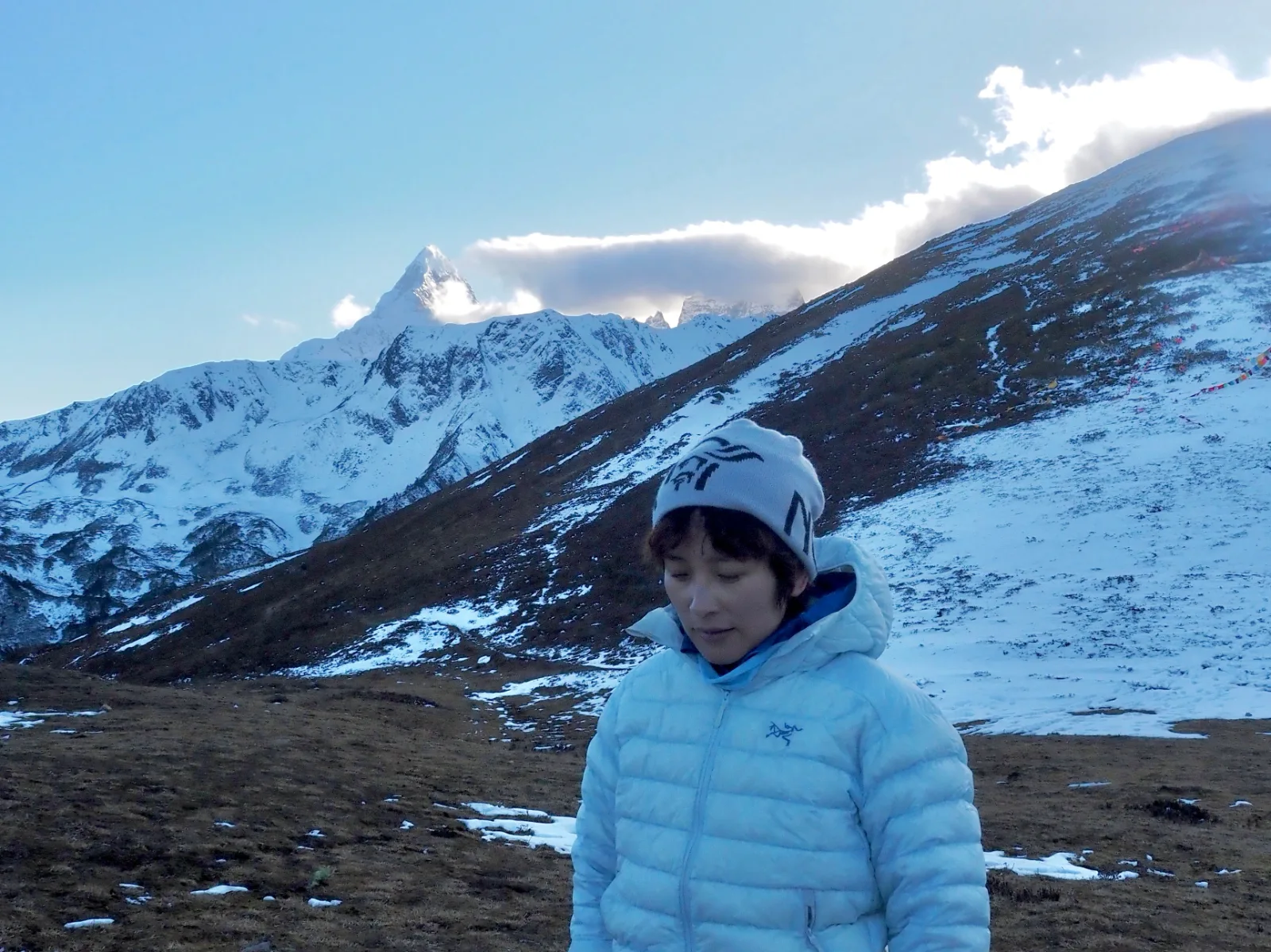 The route does not promise mastery. It offers something rarer: a chance to move through a landscape without making yourself its center. In an era when travel is often measured by access, speed, and proof, that feels quietly radical. The mountain remains itself. You leave with altered scale. And perhaps that is enough.
If You Go
Best season: Autumn is often the clearest and most balanced season for light, visibility, and overall trekking conditions. Spring can also be beautiful, especially for changing vegetation and softer atmosphere.
Route character: Expect a journey defined by altitude, changing weather, and a gradual build in emotional as well as physical scale.
Difficulty: Moderate to demanding, depending on route choice and pace. Even strong walkers should respect altitude and allow time.
Who it suits: Travelers who value atmosphere, landscape, and deeper place experience over speed, comfort, or checklist-style sightseeing.
Read next: Explore the East Slope guide, compare Kawagarbo with Yubeng, or view our selected stays near Meili Snow Mountain.